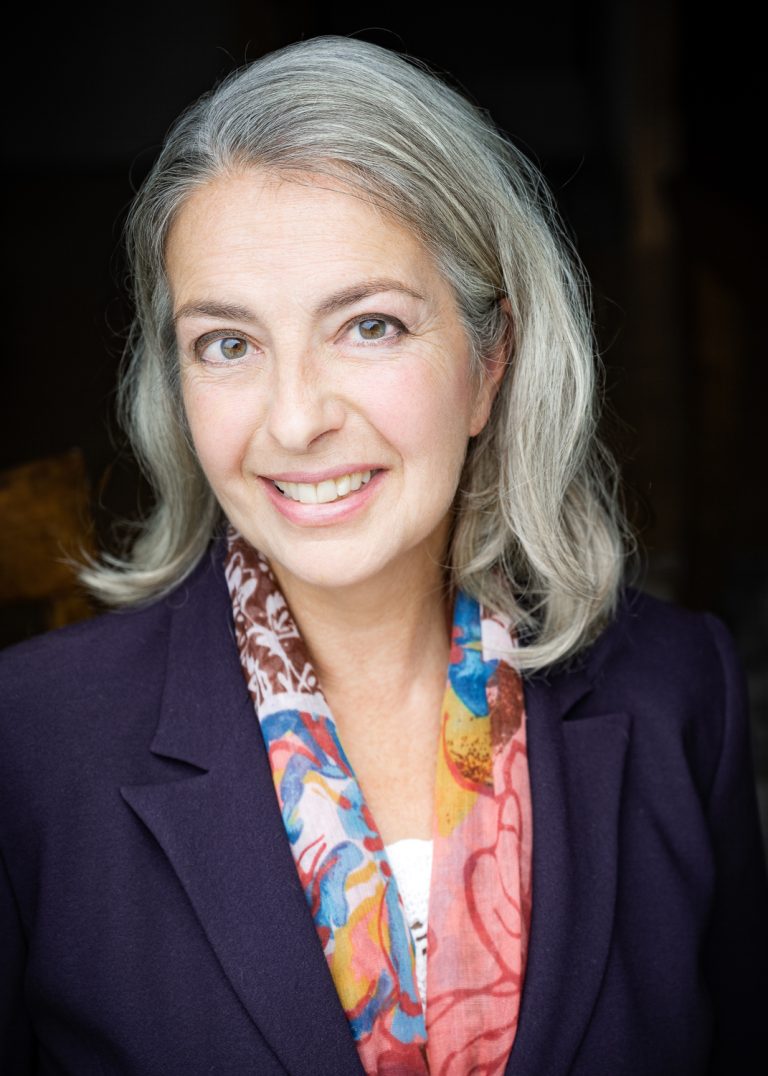
Candidate name: Miles Bowman
Occupation: Builder. Volunteer. Dad. (I run a property management company, am a director on several boards, and look after our son.)
Position on council: Councillor, Ward 1
Contact information: milesbowmanporthope@gmail.com
Social Media:
Facebook – www.facebook.com/milesporthope
Instagram – @milesbowmanporthope
Campaign Website: www.milesbowman.ca
Biography (500 words)
About Miles
Filled with wonder, obsessed with how things can be better, and striving to help everyone feel like they belong. Miles loves to laugh and loves meeting new people.
Miles grew up on a farm in Saskatchewan, studied Psychology and then moved to Ontario for his PhD in Neuroscience. He studied how people learn (and fail) and met his husband Jason while living in Kingston. After a stint in Toronto, they settled in Port Hope where the world made sense again. Their family grew with their son, Gus, followed by their dog Meryl, and then Miles’ mom moving to Port Hope last year.
While in Port Hope Miles has worked as a volunteer with several community organizations and as a director with several boards. He loves running Port Hope’s trails, gardening, renovating, working in the community, and traveling with his family.
What I do for work
I tackle problems and wrestle them into submission. I’m not kidding! Over a decade ago, I completed Ph.D. in Neuroscience at Queen’s University studying human movement and learning. The research life wasn’t for me (too much sitting at a desk), but my time in grad school taught me about understanding big problems and finding workable solutions.
I leveraged these skills as a consultant for several years working with leadership teams and contracted out my services. My unique skills meant I was hired by OnTechU doing special projects (like policy work on sexual violence). There, I cut my teeth in politics. I learned quickly that competing interests, legalities and public perception need to be managed on to find outcomes that treat people like humans.
Because of my policy work I pursued advanced mediation training at York University where I learned how to seek workable resolutions during complex negotiations.
My most challenging job came when I became a dad. The rumors are true! Parenthood is next level, and it’s taught me new applications of compassion and long-term thinking.
Presently I’ve been working as a property manager negotiating real estate deals, navigating bylaws and planning improvements that preserve historical character and modernize properties.
Identify one hobby or guilty pleasure you do that is not related to your profession or politics:
I’ve become known for gardening and plant growing. In particular, over the past years I’ve grown and given away dahlias and made indoor planters for friends from cuttings I keep in my home. I think there is something profound about how receiving a random bunch of colourful-things-on-stalks can brighten someone’s mood. It turns out plants are an incredible way of sharing beauty and placemaking.
Please answer each question clearly and concisely in no more than 500 words.
1.Why are you running for council?
I grew up in a small town where I was lucky enough to have several opportunities from my community. I’m running for council because I want that for everyone in Port Hope. I want to create opportunities for every person in Port Hope — especially those growing up here — to feel that they can chase their dreams, and find them right here in Port Hope! I’m doing this because the stories and culture of rural Ontario matter as much as any other. To show this, I’ve demonstrated a strong track record of showcasing and growing rural Ontario cultural works; I want to do that at a bigger level as part of Port Hope Council.
When I ran four years ago, I received feedback after the election that not enough people knew who I was or what I had done for the town. I’ve worked hard since that time to show Port Hope what I bring to this town and how we can get there by bettering what we have. My approach has meant working with groups that keep communities healthy. I’ve sustained and grown arts organizations through the pandemic, brought in funding for helping organizations and healthcare, worked to help tiny homes become a possibility in Port Hope (finally!), consulted with the school board to keep students safe and increase inclusive approaches for 2SLGBTQ+ students, and restored and developed local properties.
I’ve shown a commitment to building this community, volunteering, developing local business and to raising a family here. If this works for your vision of Port Hope’s future, Make it Happen, vote for Miles!
2. What is the single, primary reason you are running?
I want to help all of us learn to say YES more. Port Hope is a rare kind of town, gifted with almost too many natural, historical assets and so many interesting people! We need to turn more heads and draw attention to the greatness that’s already here. To do this, we need the improv approach of saying YES, AND (saying NO is not allowed in improv as it stops the sketch). This approach creates opportunities and as I said above, it is my mission to create opportunities and say YES to the people in Port Hope!
Too often in the last four years, I’ve seen good ideas shut down, set to the side, or underdeveloped. In most cases (barring COVID) these were the result of not enough YES. The town, its council and its citizens could benefit from a shift in mindset that helps its creative and innovative and hardworking community do what they do.
A recent example of that mindset in action resulted in the Run Salmon Run festival. At all levels you could tell that its success was the result of people working together and saying YES, AND. The festival was a first step (hopefully an annual one) toward changing how we view our salmon run and what opportunities it can create for our whole town. There can be more of this.
This approach is fundamental to what I bring to all my experiences. I seek commonalities, confirm where we agree, and find ways to make things happen. My track record shows that this approach is effective at mobilizing positive changes and making this community stronger and healthier. YES, AND it pays for itself too!
3. What will you do to address this issue?
If we view the town as a ship on the water, council is the wind in the sails. Council’s job is to know the direction the ship is headed (chosen by its citizen crew, steered by its employees) and to create favourable winds. We need to be community champions and connectors.
Council needs to fill the ship’s sails by finding more support for where we’re headed. This support can come by way of citizen activation, securing funding, or helping put in place programming and infrastructure. All of these activities require knowing when to get people excited or motivated and when to let the crew do its work to steer the ship.
One of my best skills, and one that has led to my successes on grant writing, is that I can sell Port Hope’s best features. This is how I supported Mayor Sanderson’s dream of animating our train trestles and wrote a $100k tourism to begin making it happen. This is also how I’ve worked with local non-profits to enhance our local culture spaces. My goal as council member would be to further elevate and activate our best and brightest and continue my legacy of creating opportunities for locals to succeed in showing off their best ideas to the world.
4. Identify one success of the previous council?
For my money, it’s hands down the attempted purchase of Wesleyville. The efforts of council and town staff to secure our municipal government’s right to self-govern its lands was one of the most effective uses of municipal resources I’ve seen.
I’ve noticed that local politics often don’t register on people’s radars. But, one of the issues that gets people’s notice is what’s happening in their backyard. Wesleyville is literally in all of our backyards. The actions by the town to attempt to secure these lands would mean Port Hopers and their representatives would have had the ability to determine what happens to those lands.
To make it simpler: Would you want the land next to you in the hands of a developer whose interest is their own profit, or would YOU want a say in how that land is developed?
Having a council that looks to the longer term and protects our collective ability to choose the future of Port Hope ourselves is one of the boldest and most commendable actions I’ve seen at the municipal level.
I would add that the failure to secure these rights was a powerful learning lesson for those who have been paying attention as to how much we need to fight for our ability to make decisions about the lands around us. It was stopped because another level of government stepped in changed how decisions would be made for Port Hopers. The entire process was, I think, very informative for our town.
5. Identify one criticism of the previous council?
I have concerns – as do many voters I’ve spoken with – about the level of transparent engagement with our citizenry. Some of this can be explained in our town’s approach to online communication. Some can be explained by the PHAI cleanup which is outside the town’s control. And some results from advancing policy without first educating or engaging the public.
Council’s recent decision to remove the trees at Lion’s Park is a key example of how communication and engagement efforts need to be improved. Many concerned citizens couldn’t find information about how the decision was made, the order of actions being taken, and what choices were available. Public engagement was absent or lacking and the process and eventual outcome were not sufficiently explained. In an effort to help, I gathered available resources and shared them publicly because I was seeing so many questions from so many people about it. This should be a service provided by the town.
An additional example comes from the process involved in changing local bylaws to allow tiny homes. Over the last four years I have been working with Think Tiny Homes Northumberland to prioritize new approaches for affordable housing in the municipality. Our advised approaches were not incorporated into the bylaw changes, and we and other groups were excluded from the process because consultations were improperly advertised and inaccessible to multiple participants. Instead of extending consultation when this was raised, recommendations were put forward anyway, and council accepted this process as complete.
In both cases the end result is the same: resentment builds and disenfranchises voters. Actions that result in this outcome must be addressed.
5. How will you address the one issue you identified from the previous council?
Public consultation is hard work and it can be so much more fruitful than what’s described above. Importantly, the town can and does meaningfully engage the public. Take, for example, the waterfront plan. This work, headed by a committee of citizens, consults broadly with many groups in town. What’s more, Parks and Rec has conducted several thoughtful and engaging publicly-advertised consultations. We have processes that could be adopted by all divisions of the town.
My own work in policy development taught me about good consultation. It begins with humility and acknowledging that the people you are reaching out to have valuable input. To receive it, you have to believe in their expertise and be curious about what you’re not offering. This is uncommon practice for corporations. They often their failures on the user – they blame YOU. I know how to spot this and have learned how to change the conversation. I’ve corrected poor consultation practices in corporations before, I can do that again.
6. Why should voters select you over others?
Respectfully, I think the spirit of this question misrepresents how our electoral system works. Citizens in my ward, Ward 1, get 4 votes. So, they get to vote for an entire Ward 1 council.
I’ve learned that many voters voted fewer than 4 times last election. Some of this was “strategy” and some was not knowing about 4 votes. In all cases, the effect is the same. If you vote less, you get less say in the make-up of council. Period.
Individuals do not run council and we should not represent your vote as pitting them against each other, but instead about selecting workable teams. Think of it as a line of jars with each candidate’s name on them and each citizen puts 4 marbles in jars they choose. After all the voting, the jars with the most marbles will be the team that represents Port Hope. This matters most when other voters, who think differently than you, cast all four votes and end up with a larger say in who makes up council than those who “strategically vote for one”.
I’ve heard from many voters that their voice is not represented on council. This is, at least in part, because many citizens didn’t vote for a full team who – through their collective approach – represent their values.
So my plea is this: choose 4 candidates that align with your thinking, even if only slightly. In the end, this means you’ve exercised your full democratic right and you get a better chance of your voice being reflected on council.
As for those final four? I hope my explanations above and commitment to a collaborative team for all of Port Hope speak to why I am a strong choice to be included in your final four.
About the Author