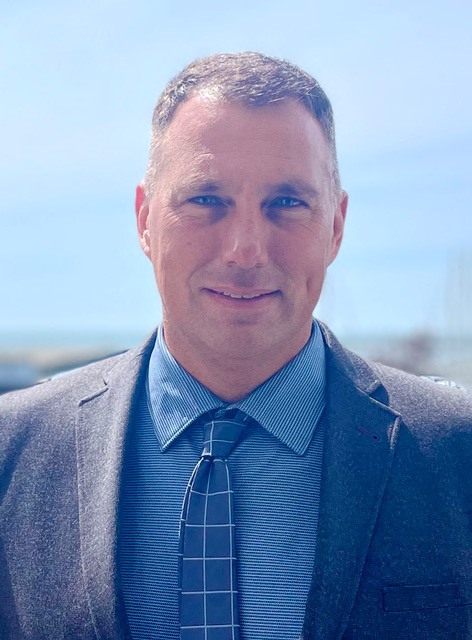
 Candidate name: Ashley Bouman

Occupation: Community Advocate/Educator
Position on council: Councillor
Contact information
ashleybouman4council@gmail.co
Social Media:
Facebook – Ashley Bouman for Cobourg Council
Twitter – @ashey4council
Campaign Website:
Biography (500 words)
Ashley Bouman is a local community activist and disability advocate. She has been involved with PFLAG’s Cobourg Chapter since 2014 as the Volunteer Events Coordinator. In 2016, she became Chapter Leader when the previous leader stepped down. In this role she facilitates a monthly support group, coordinates Pride events and festivities in Northumberland County for Pride Month, and other 2SLGBTQ+ events throughout the year while promoting community awareness and education of queer rights and advocacy.
For the past few years, she has been providing free webinars for the community. Pronoun Usage and Trans Advocacy in Northumberland, 2021 is a webinar that was created, designed to educate non-profit organizations and local businesses on the importance of creating safer community spaces through normalizing pronoun usage, and the current trans advocacy issues in Northumberland County. Past participants have included Cobourg Police Service, Thrive Northumberland, Rotary Club of Northumberland Sunrise Group & Northumberland United Way Board of Directors.
At the moment she is a Director on three Boards; The Help and Legal Centre of Northumberland, Kawartha Sexual Assault Centre and Transition House. She is also a member of the Town of Cobourg’s Equity, Diversity and Inclusion Advisory Committee.
She has a Bachelor of Arts Honours degree in English Literature and Women’s Studies from Trent University. She attended George Brown College in their Assaulted Women and Children’s Counselling and Advocacy Program and became a licensed Paralegal in the province of Ontario in 2019.
She is the recipient of a Port Hope Civic Award in 2018 as a Committee Member of Take Back the Night Port Hope for her part in organizing Port Hope’s first Take Back the Night rally in 2017. She was also recognised as a Go Northumberland Woman of Influence in 2020. She received a Town of Cobourg Civic Award in 2021 for her community advocacy work.
Identify one hobby or guilty pleasure you do that is not related to your profession or politics:
I love to crochet sweaters.
Please answer each question clearly and concisely in no more than 500 words.
1.Why are you running for council?
In my 37th year of life, motivated by what I have seen as a tenant and worker in Cobourg and my experiences as a Committee Member on the Equity, Diversity & Inclusion Advisory Committee, I decided to run as a Town Councillor in the 2022 Municipal Election.
As a dedicated community advocate for over 10 years, I felt that it was time to run for town council. I have a lot of knowledge and experience working with local not-for-profit organizations and vulnerable populations. I would like to be a reflective voice for all people that are living in Cobourg. My campaign slogan is “Community Voices Matters” and I would like to see municipal politics taking more initiative when receiving community voices. Community engagement is a must, but communication must be clear and attainable.
I am excited about this political endeavour and look forward to meeting you as I canvas in this brilliant community.
2. What is the single, primary reason you are running?
The primary reason I am running is because I am concerned about accessibility in Cobourg. As a person with a disability myself, and as a disability advocate, I would like to see Cobourg evolve more into inclusivity and accessibility, which I find is severely lacking at the moment.
It is important to me to make sure that Cobourg is accessible to everyone. The Accessibility for Ontarians with Disabilities Act (AODA) was created with the goal of having a completely accessible Ontario by 2025 (twenty years after it was enacted).
How does Cobourg measure up? Will we be able to meet the deadline? These are key issues that I will look into as a Councillor.
3. What will you do to address this issue?
My goals for increasing accessibility will be creating more accessible spaces, making sure that there are adequate numbers of accessible public washrooms, public transit that is accessible to all those that rely on it, giving the disabled residents of Cobourg a bigger voice with assistance from the Accessibility & EDI Committees, and seeing what we can do as a municipality to offset the hardships of those that are relying on ODSP for monthly income.
4. Identify one success of the previous council?
I believe that one success of the previous council was their commitment to Equity, Diversity and Inclusion (EDI) while creating a specific EDI Committee (which I was invited to sit on as a community member) and becoming a member of the Coalition of Inclusive Municipalities, which brings municipalities that want to improve their policies against racism, discrimination, exclusion and intolerance. The municipalities undertake initiatives to eliminate all forms of discrimination with a view to building open and inclusive societies.
With my experiences doing ground work as an activist in the 2SLGBTQ+ community, I can honestly say that homophobia, transphobia, other queerphobias, racism and bigotry openly exist in Cobourg. I am eager to take on the task to make sure that everyone feels welcome in Cobourg. No one should feel unsafe or scared by just existing and living in their communities.
5. Identify one criticism of the previous council?
Making public transit inaccessible. The switch to an On-Demand bus service was an area that I have openly criticized since I realized it was happening. I have spoken to many people that used to rely on the bus as their sole method of transportation, many of whom now, do not take the bus either because they don’t understand how or do not have the means to schedule a pick-up/drop-off.
Cobourg’s public transit used to run on a regular schedule (though it was 10-45 minutes behind schedule a lot) but you would know that the bus would come by the stop eventually. Now you don’t have that guarantee.
In order to ride the bus in Cobourg, you need to book a pick-up time at a registered stop, which means you need to either call, or book online by computer or smartphone in order to access the bus. This is problematic for many transit users because it assumes that they have access to a computer with the internet or a smart phone with data access. You can also call to book a pick-up but the call centre now operates from 9am – 5pm, if you need to book after 5pm, you must do so online. I have spoken with many community residents who used to take the bus all the time, but don’t now because it is just not accessible to them, so they stay home or walk if they are able.
It is a travesty that our public transit has been decimated by the previous council, and that currently there are ongoing issues with access to transit and bus driver retention.
6. How will you address the one issue you identified from the previous council?
I would like to reiterate that public transit is never a money-making venture. It is a service that a municipality provides to their residents that may not have their driver’s license or access to a car to get them to the places that they need to go. Public transit needs to remain accessible and affordable to the people that rely on it. Their voices and their livelihoods matter. It is not only a matter of transportation but one of public health (being able to get to medical appointments) and public interest (not feeling like you are stuck at home when you’d like to go out).
I would like to have more community outreach with this ongoing issue. Several times, the Town of Cobourg has put out surveys on the issue, but they are only accessible if you have a verifiable Cobourg address, a verifiable email address, access to a computer and/or internet to access the survey and you need to create an account on the Engage Cobourg website in order to complete the survey. The last time the town did this, they received 60 surveys and most said they liked the bus.
Reaching out to residents in more traditional, non-technological ways is important. Listening to individuals’ voices and circumstances matter. Collecting individual experiences and case studies matter. Talking to organizations that deal with accessibility is important. Organizing rallies and getting the community aware and involved of the matter is also important because you never know when you may have to rely on public transit.
7. Why should voters select you over others?
I have been living and working in Cobourg since I came back from school in 2011. Since then, I have been an activist for 2SLGBTQ+ rights and advocacy in Northumberland. Over the last decade there has been progression and visibility of the queer community, which makes me proud to live and grow in this community. I want to make sure that everyone feels welcome and that Cobourg is accessible to all. Community voices matter.
About the Author